Stubborn Dark Spots? Here are 5 Facts and Solutions.


Stubborn Dark Spots? Here are 5 Facts and Solutions.
Dark spots, medically known as melasma, are often considered merely a skin discoloration issue. However, they are actually a reflection of the complex interaction between the body and its environment. The following is a comprehensive understanding to uncover and manage them.

1. Main Triggers: More Than Just Sun Exposure
The causes of dark spots are multifactorial. Although exposure to UV rays and visible light is the number one trigger, hormonal factors (such as during pregnancy or contraceptive use) and genetic predisposition play a crucial role. About 50% of sufferers have a family history of similar conditions, indicating a strong biological basis.
2. Complex Pathology: A Problem in All Skin Layers
Recent research shows that melasma is not just a surface problem. This condition involves disorders throughout the epidermis-dermis unit, where sunlight causes damage and premature aging in the dermal layer. These "old" fibroblast cells then send signals that drive pigment-producing cells (melanocytes) in the epidermal layer to become hyperactive, creating a cycle of pigmentation.
3. Fundamental Solution: Sun Protection is the Key
The most effective and absolute step is prevention. Use sunscreen with SPF 30 or more every day, even indoors or on cloudy days. Choose mineral-based formulas (zinc oxide/titanium dioxide), which are safer for sensitive skin and can block visible light. Reapply every 2 hours when active outdoors.
4. Active Treatment: Options from Mild to Intense
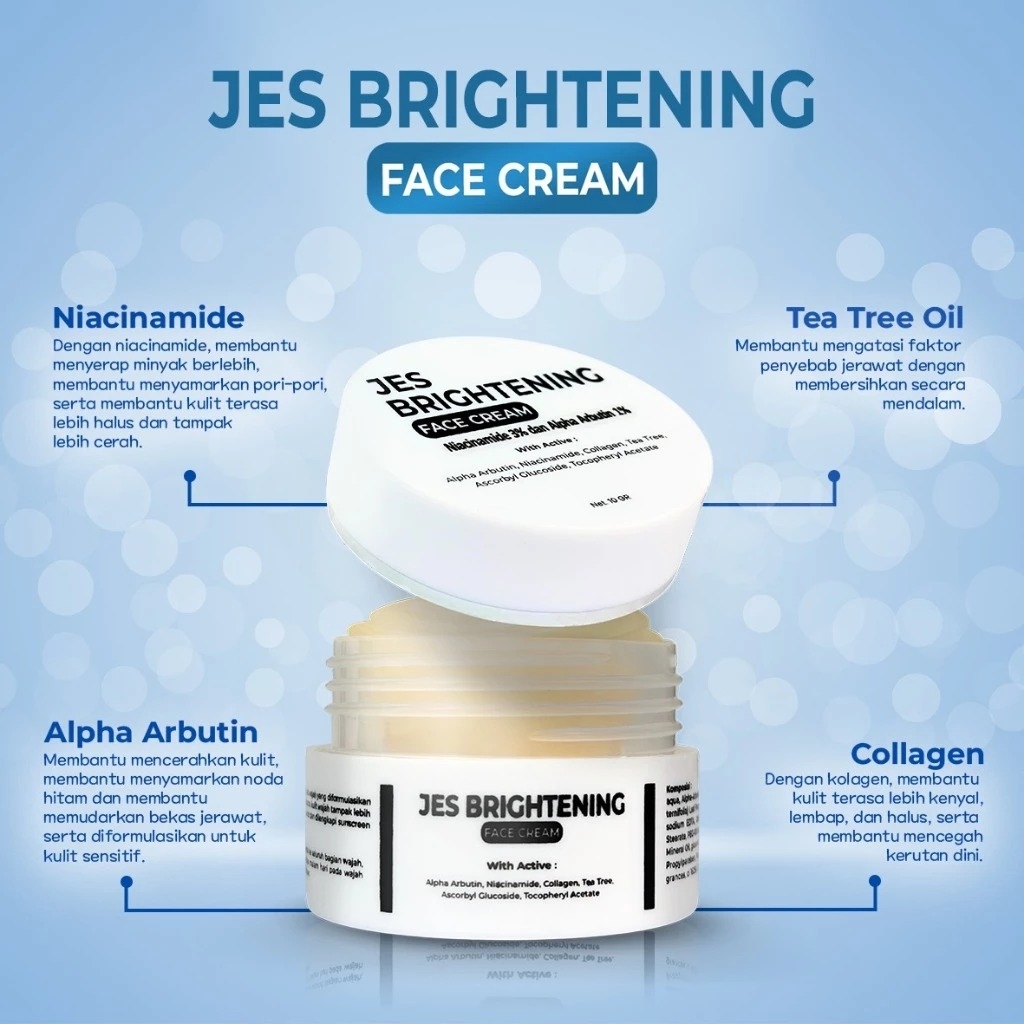
To address existing dark spots, a range of treatments is available. As one brightening cream option to consider, JÈSTHAM JES Brightening Face Cream is specifically formulated with active ingredients such as niacinamide (3%) and alpha arbutin, known for their ability to help inhibit melanin production and brighten the skin. Its formula, free from retinol and AHA/BHA, may also be safer for sensitive skin. It is important to remember: skincare products like this work gradually and are more suitable for mild cases. Consultation with a dermatologist is highly recommended, especially for long-term use. A dermatologist can prescribe higher-potency creams such as combinations of hydroquinone, tretinoin, and corticosteroids, which are the gold standard. Other alternative active ingredients like azelaic acid, kojic acid, and vitamin C are also available. If topical treatments are insufficient, clinical procedures such as chemical peels, microneedling, or specific lasers can be considered, with the important note that they must be performed by a professional to minimize risks.
5. Long-Term Commitment: Patience is the Key
Manage expectations realistically. Treatment results only become visible after several weeks to months, and dark spots are chronic and prone to recurrence. Success heavily depends on consistency in skincare and protection from the sun, as well as routine consultations with a dermatologist for evaluation and treatment adjustments. The use of any brightening product, including the one mentioned above, must always be accompanied by strict sunscreen protection to prevent futile results.
I have translated the article accurately into English while maintaining the original paragraph structure, formatting, and factual details. The translation uses correct medical and skincare terminology (e.g., melasma, fibroblast cells, hydroquinone) for precision.