Understanding the Functions of Niacinamide: The Versatile All-Rounder in Skincare


Understanding the Functions of Niacinamide: The Versatile All-Rounder in Skincare
In recent years, the skincare world has been enlivened by an ingredient hailed as a "jack of all trades": niacinamide. From pharmaceutical-grade products to affordable local brands, this ingredient is almost always present in flagship formulations. So, what is the secret behind niacinamide's popularity? Let's explore further.
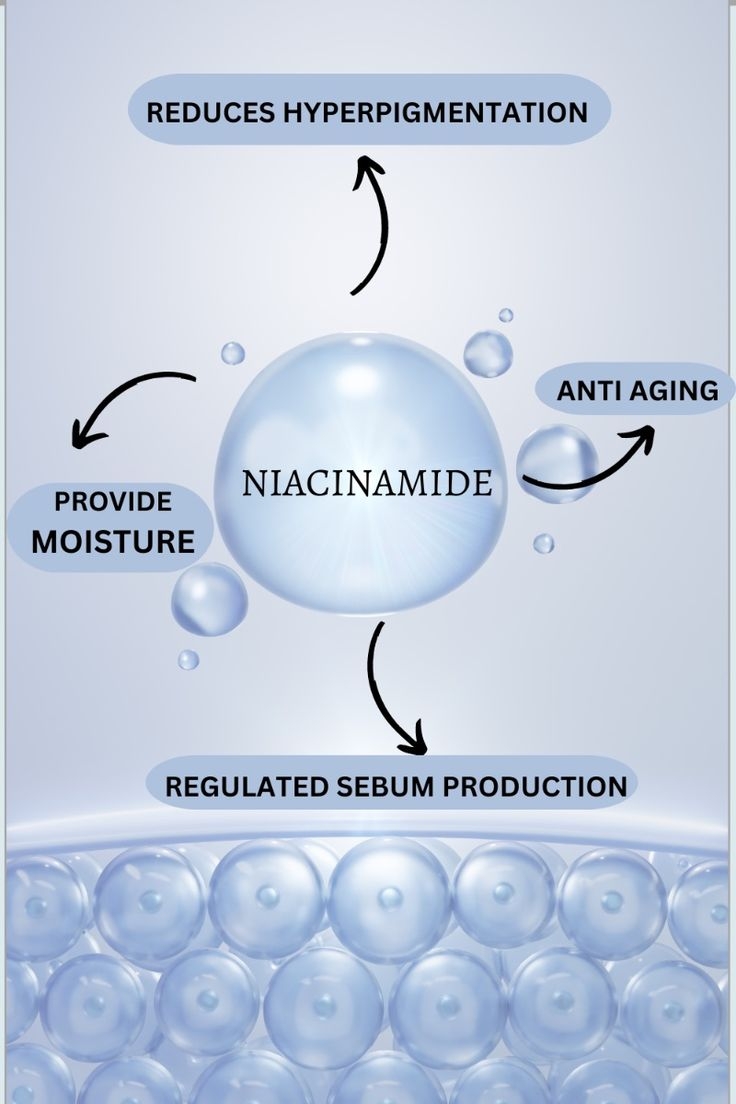
What is niacinamide, and why is it safe for many people?
Chemically, niacinamide is a stable form of vitamin B3 (niacin) that easily interacts with the skin. Unlike other active ingredients like retinol or AHA, which can cause irritation at certain concentrations, niacinamide is known as a "peacemaker," an ingredient that is soothing, anti-inflammatory, and suitable for almost all skin types, even for those with rosacea and sensitive skin.
Mechanism of Action: How Can One Ingredient Handle Many Problems?
The key to niacinamide's versatility lies in its fundamental way of working. The following is an explanation of its mechanism of action for each skin problem:
1. Controlling Oil & Minimizing Pores:
Niacinamide works by reducing sebum (oil) production in the sebaceous glands. With controlled oil, pores do not continuously stretch and appear visually smaller. Research shows significant results within 2-4 weeks of use.
2. Treating Acne & Inflammation:
With its strong anti-inflammatory properties, niacinamide relieves redness and swelling on active acne. It also prevents new acne by maintaining hair follicle health and fighting the bacteria P. acnes.
3. Repairing the Skin Barrier:
This is its most important function. Niacinamide increases the production of ceramides, sphingolipids, and fatty acids, which are the "building blocks" of the skin's protection. A strong skin barrier means more moisturized skin, less proneness to irritation, and less reactivity to allergens.
4. Brightening & Anti-Aging:
Niacinamide works on pigment-producing cells (melanocytes) by inhibiting the transfer of melanosomes (sacs containing pigment) to the outermost skin cells. As a result, dark spots fade and the skin appears more even. For anti-aging, niacinamide stimulates the synthesis of type I and III collagen in the dermal layer, which tightens the skin and fills in fine lines.
Synergistic "Power Duo": Combinations You Should Try
Another advantage of niacinamide is its ability to collaborate. Here are some powerful duos:
1. Niacinamide + Zinc: A classic combination for oily and acne-prone skin. Zinc helps control oil and relieve inflammation, strengthening niacinamide's action.
2. Niacinamide + Hyaluronic Acid: An optimal moisturizing combination. Hyaluronic acid draws in water; niacinamide locks in that moisture by strengthening the skin barrier.
3. Niacinamide + Peptide: A powerful anti-aging duo. Both work synergistically to stimulate collagen production through different pathways.
Guide to Choosing the Right Niacinamide Product
Concentration: For beginners, start with 5%. A 10% concentration is suitable for stubborn acne and hyperpigmentation targets. Higher concentration is not always better; the overall product formulation is important.
Texture: Choose based on skin type. Gel- or water-based serums are suitable for oily skin, while cream or lotion textures are better for dry skin.
Combinations to Avoid: Contrary to popular myth, niacinamide can be used together with vitamin C (especially stable derivative forms). However, for very sensitive skin, it's best to allow a 15-30 minute interval between applications.
Niacinamide is not just a trend but one of the skincare ingredients most supported by scientific research. Its multitasking ability, coupled with its high tolerance profile, makes it an ideal choice as a reliable "base routine" for treating various skin problems in one simple step.
Final Tips: Consistency is key. Allow 8-12 weeks to see optimal results for hyperpigmentation and wrinkle concerns. Start with once a day, then increase the frequency as your skin adapts.