30 Years of Waiting: The Story of Nahan, an Elderly Pedicab Driver Longing for His Child to Return Home


30 Years of Waiting: The Story of Nahan, an Elderly Pedicab Driver Longing for His Child to Return Home
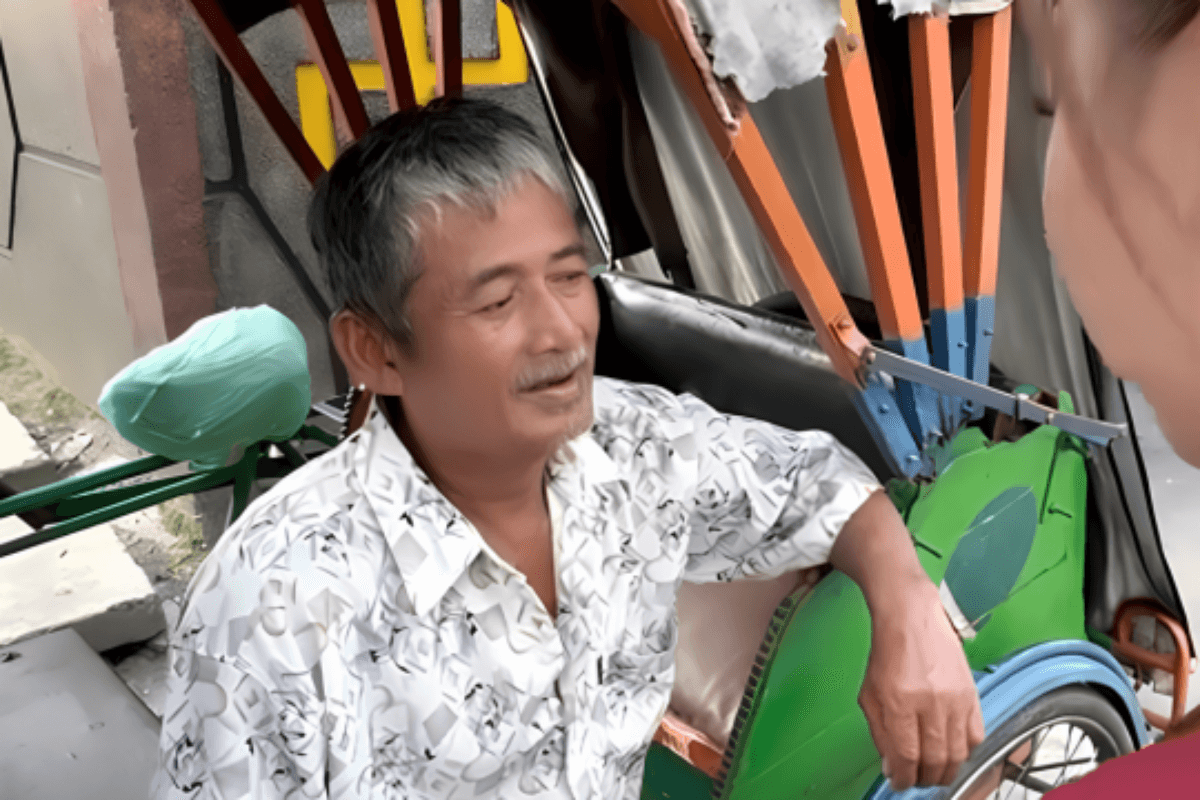
Medan, North Sumatra – (01/30/26) On an afternoon that might have felt ordinary to many, a small encounter took place on a roadside. An elderly man, frail and wearing a shirt with holes in the back, appeared shy as he was invited by Jesica Thamrin to take part in a free shopping challenge. His name is Mr. Nahan, 64 years old. Yet, behind the wrinkles on his face and the look of weariness, lies a wound that has never healed over the past thirty years: the departure of his only child, who never returned.
When asked about his child, this simple question immediately cut deep. Mr. Nahan answered innocently, yet heartbreakingly. His child had been gone for thirty years. Three decades is no short time. Over that span, Mr. Nahan has endured thousands of days alone—without news, without a voice, without certainty. He could no longer even recall his child’s name. Not because he didn’t care, but because time had faded the memory, though the longing remained firmly rooted in his chest.

The conversation started off lightly. Mr. Nahan was invited to shop at a convenience store with a two-minute time limit. He was allowed to take whatever he needed. However, even with this freedom, Mr. Nahan seemed awkward. He only picked up a few items, such as rice and eggs, moving slowly and cautiously. There was a sense of reluctance, as if he didn’t want to impose. But Jesica, who accompanied him, gently encouraged him, helping him select the basic necessities he truly needed.
Gradually, the mood shifted. After casual shopping, the conversation began to delve into Mr. Nahan’s daily life. He admitted that he made a living by pedaling a becak (pedicab). His earnings were meager, barely enough to afford food. Sometimes, he even had to skip meals because he had no money. His home was quiet. He had no wife by his side, and his only child had vanished from his life without a trace. "I'm alone, no one to keep me company. When I'm sick, there’s no one to care for me," he said softly, painting a picture of the profound solitude that marked his existence.

The emotional peak came when the questions dug deeper into the feelings of a father who had been left behind. When asked, “If your child were watching, what would you want to say to him or her?” Mr. Nahan paused for a moment, then answered in a trembling yet meaningful voice: “Come home; Father misses you. Father always misses you; I miss you. Take care over there.” These short sentences came from a man who may never have been skilled with words yet harbored deep longing in his heart.
Despite living in poverty, kindness still resides in Mr. Nahan’s heart. When given extra money or blessings, he initially refused, feeling that what had already been given was enough. He didn’t want to take too much, worried he would burden the one helping him. It was this very nature that moved so many. Despite his limitations, he was not greedy. He simply wanted to survive, and in his twilight years, perhaps the only thing he truly longed for was not wealth, but the presence of the child he once held and raised.

Mr. Nahan’s story is a portrait of thousands of elderly people across the nation left behind by their children—whether due to migration or broken bonds. In his solitude, he continues to live his days pedaling his bicycle, even as his back grows more bent. At the end of their encounter, Jesicca, who had assisted him, bid him farewell, carrying his purchases. Words like “Stay healthy, always” and her closing prayers may not be able to replace the child who has been lost for so long. But at least, for a moment, Mr. Nahan didn’t feel so alone.